

Getting Your Fab’s Heating Up to Speed
If you’re building a smart fab, you’ve probably realized that old-school heating just doesn’t cut it anymore. You can’t run a high-tech, automated line using tools that take forever to warm up or react. That’s why we lean on infrared (IR) systems. They’re fast, they play well with your software, and they actually do what you tell them to do.
Stop waiting on the heat
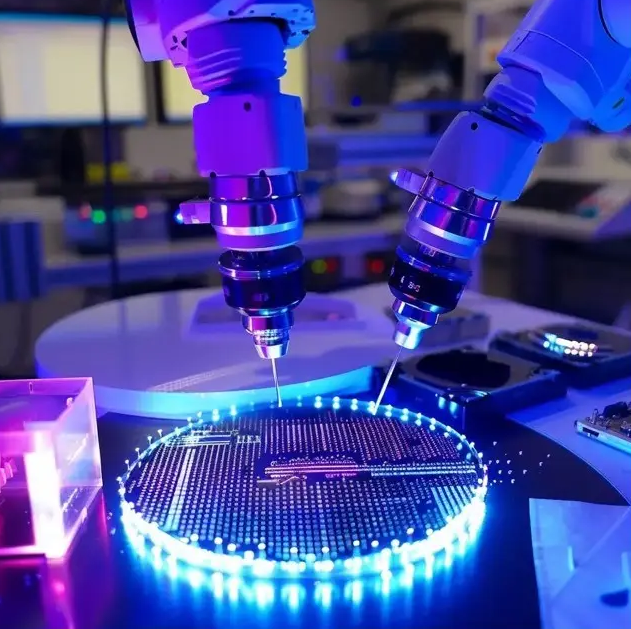
Standard convection ovens are slow. They lag. But IR is different—it’s radiation, so the heat hits the surface the second you turn it on. In a digital setup, this is a lifesaver. You can sync your heat cycles with PLC triggers in milliseconds. We dial in the exact wattage per centimeter so your wafers or substrates heat up evenly. Plus, you can map out your heat zones digitally. If you see a hot spot forming, you just tweak the power in real-time.No more guessing.
Fitting it all in
Space is always a problem on the floor. We design these systems to stay out of the way. By using shortwave or medium-wave emitters, we can put the heat source closer to the workpiece, which lets us shrink the rest of the machine. Now, a word of caution: we use high-voltage setups to get that heat density, which means your cooling has to be spot on. If your airflow is weak, your control electronics are going to bake. And trust me, you don’t want to be replacing fried boards in the middle of a shift.
Knowing exactly what’s happening
The best part about moving to IR? You stop flying blind. You can plug these systems right into your SCADA network. You’ll see exactly how much power you’re using and, more importantly, when a lamp is starting to fade. You’ll catch that dip in the data long before a part actually fails quality control. It turns thermal management from a stressful manual chore into something you can actually predict. You get faster ramp-ups and way less wasted energy. It’s just a smarter way to run a floor.