
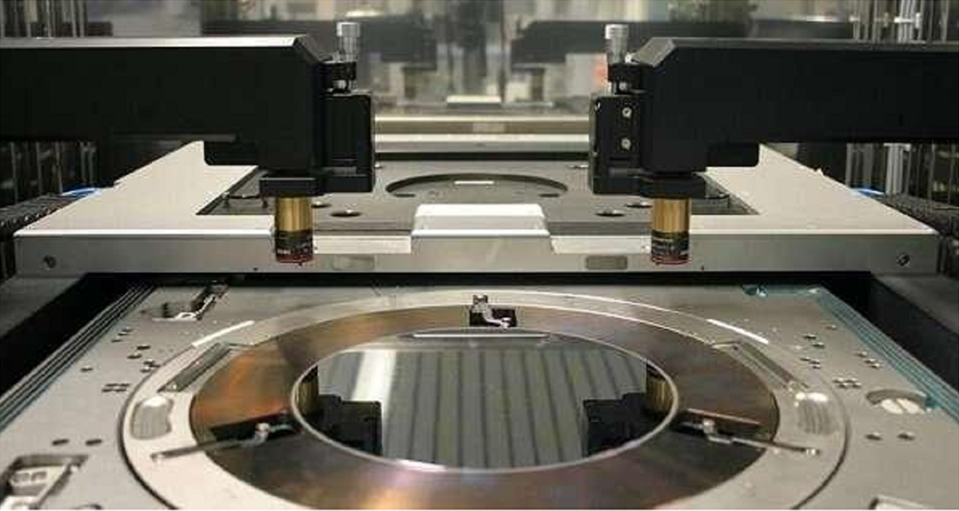
On the fab floor, a 0.5°C drift in soft bake is enough to bake a latent defect right into the photoresist. And if your hard bake isn’t uniform, you’re not just losing time—you’re losing the lot. The heating element has to deliver, shift after shift, hour after hour. What matters under the hood We built the ultra pure water heating lamp around controlled short-wave infrared emission, sealed inside a quartz envelope that’s cleanroom-ready for Class 1–100. That gives us wafer-level thermal uniformity within ±0.1°C across the bake surface, with zero particle generation and no outgassing to contaminate the resist. Power density is tuned for fast thermal response, so the setpoint snaps back within seconds after the door opens and closes. The lamp body uses ultra pure water circulation for stable, closed-loop heat removal—protecting the wafer’s thermal budget and keeping the chamber profile repeatable, lot after lot. Why it holds up in litho In lithography, repeatability is the scoreboard. This lamp keeps soft bake and hard bake temperatures tightly distributed, which cuts line-width variation and helps yield on the advanced nodes. In the field, it runs 7×24 with zero unplanned downtime, and life expectancy exceeds 5,000 hours with less than 5% output decay—meaning fewer spares on the shelf and smaller maintenance windows. Energy draw is matched to the process thermal mass, so you lower operating cost without giving up control on ramps. What you need to plan for The lamp drops into existing bake tracks with a compact footprint and standard fluidic/electrical interfaces, but it does need a dedicated ultra pure water loop with verified resistivity and particulate control. If you run deionized water below the target temperature window, you can get micro-bubble nucleation, so we specify a minimum flow and pressure band to keep the envelope thermally stable. Set the loop up right once, and the lamp behaves like a fixed process variable—not another maintenance headache.