
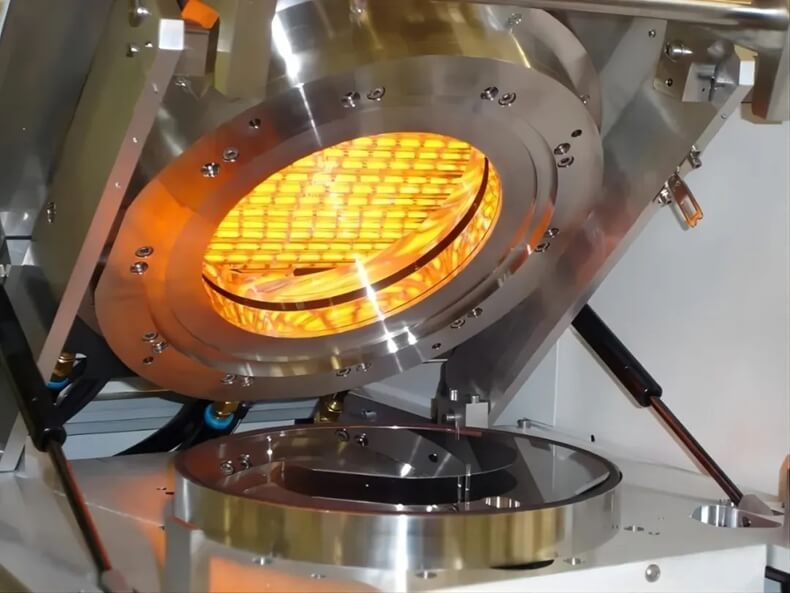
Stop Heating Your Tools (and Start Heating Your Wafers)
When you’re heating a wafer, you want the energy going into the substrate—period. You don’t want it leaking everywhere else. The problem with standard infrared lamps is that they just spray heat in every direction. It’s messy. Before you know it, the inner walls of your expensive equipment are hot enough to burn an operator or, even worse, warp the sensitive parts you spent a fortune on. That’s why we use directional heating.
How the physics actually works
Think of a standard quartz lamp like a lightbulb that throws light in a giant hemisphere. To fix that, we use specific reflectors and coatings that basically act like a funnel. They squeeze that infrared energy into a tight, focused beam aimed straight at the wafer. Because the beam is narrow, way less stray heat hits your chamber walls. You get the wafer up to the exact temperature you need, but the chassis stays cool to the touch. It’s a much cleaner way to work.
Finding that “sweet spot” for distance
You can’t just jam a high-wattage lamp right against a surface. If you do, you’re asking for thermal runaway. There’s a delicate balance here. If the lamp is too close, the heat density is just too much for the holder to handle. But if you push it too far back, you’re wasting energy and losing efficiency. We figure out the perfect distance by looking at the lamp’s wattage and how much the wafer reflects. Moving the lamp closer makes the heat hit harder and faster, but it puts a lot more stress on your cooling system. You have to decide if you want a lightning-fast ramp-up or a tool frame that isn’t under constant thermal stress.
The trade-off
Now, this isn’t a magic wand. There’s a catch. When you tighten that beam, you’re trading broad, “safe” heating for precision. If your alignment is off by even a few millimeters, you’ll end up with hot spots and uneven temperatures across the wafer. It’s a precision game. That’s why your technicians need to be obsessive about the mounting brackets. There can be zero vibration. If the lamp shakes, your process fails. Simple as that.