
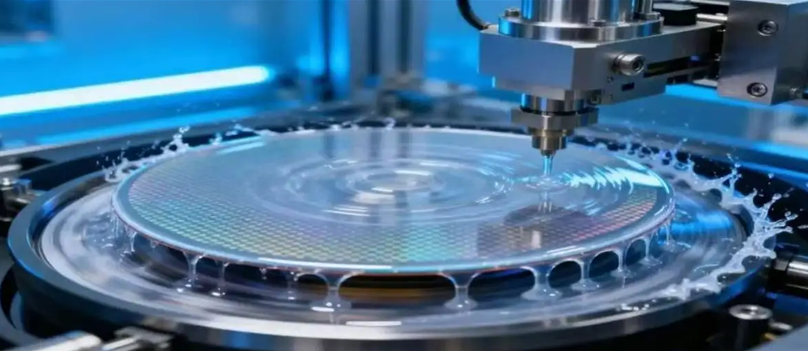
On a 300 mm line, a half-degree Celsius drift during the photoresist bake is enough to throw critical dimension bias and wipe out an entire lot. We built the carbon nanotube fabrication heater to keep thermal behavior nailed down inside the process window, shift after shift, with no excuses. What matters under the hood The heater runs on a carbon nanotube element, so it responds fast and settles stable. You get wafer-level uniformity within ±0.1°C across the surface, and the same tight band on repeatability. That’s what keeps soft bake and hard bake profiles consistent, lot to lot. The construction generates essentially zero particles, which holds up in cleanroom classes 1–100, and the materials were chosen to keep outgassing low even under continuous bake cycles. In day-to-day terms, that means fewer defects, tighter CD control, and a thermal budget you can count on. Why this matters in lithography In lithography and photoresist processing, the thermal profile isn’t a background setting—it is the process. This heater locks down the bake step so line width, sidewall angle, and residual film thickness stay in spec, and you stop throwing away good wafers to scrap and rework. It runs 24/7 without unplanned downtime, and field data shows no measurable drift over long intervals, which is exactly what high-volume manufacturing schedules demand. Because it responds quickly, idle soak time drops and the operating cost per wafer comes down. What you need to do right Integration is straightforward, but the carbon nanotube element has strict temperature limits and controlled ramp rates. You’ll need to match the tool’s thermal mass and tune the controller to hit the full uniformity performance. Plan a short commissioning run to nail the PID settings and verify profile alignment across all process modes.