
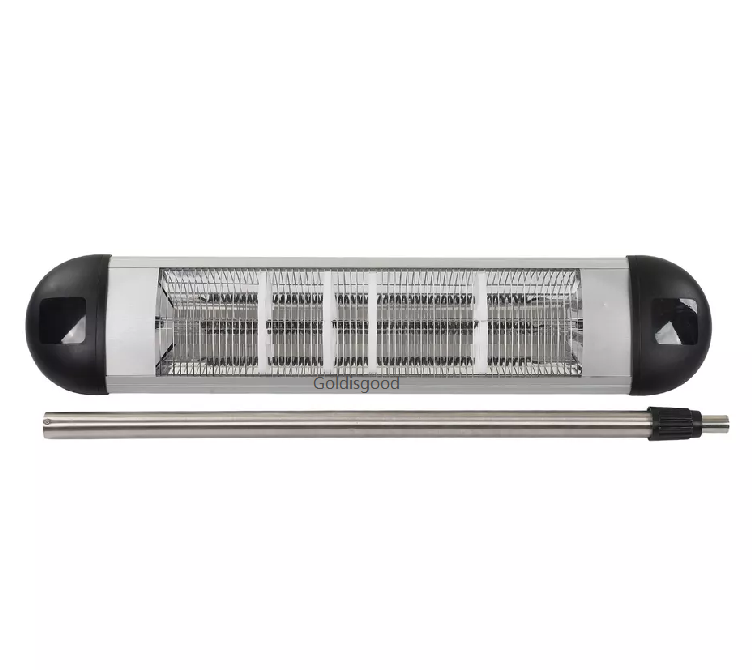
Why Your Factory Heaters Actually Die (and How to Stop It)
Ever wonder why those big ceiling heaters quit on you? Most people assume the heating element just burned out. But honestly? It’s usually the lead-wire connection that gives up the ghost first. Here is what’s actually happening: that spot where the electrical wire enters the ceramic or quartz housing is a total magnet for trouble. In a lot of basic setups, heat just sneaks its way backward into the wiring. It basically bakes the insulation until it’s brittle and cracks. Then, boom—you’ve got a short circuit.
The “Heat Creep” Problem
Heat doesn’t just push out into the room; it travels backward along the wire. If the sealing is sloppy, the wire insulation hits its breaking point. A lot of cheap assemblies rely on basic glues or just “hope for the best” fits. The problem is that those materials shrink and harden every time the heater cycles on and off. We do things differently. We use a high-end seal that creates a tight, airtight barrier. It keeps the moisture and oxygen away from the contact point and, more importantly, stops that heat from migrating into the wire jacket.
Why the Details Matter
It sounds nitpicky, but microscopic gaps are the enemy. When factory dust and humidity sneak into those tiny holes, they mix with the heat and speed up oxidation. It’s like rusting from the inside out. We focus on the compression seal. We make sure the wire is seated with the exact right torque and a sealant that expands and contracts at the same rate as the heater body. That way, the seal doesn’t just pop open the second the unit hits peak temperature. It stays put.
One Small Warning
There is a trade-off, though. Because this seal is so solid, the wire exit is a bit more rigid. Please, don’t bend these wires sharply when you’re installing them. If you kink the wire too close to the seal, you’re putting a lot of stress on the internal junction. Just give the wire a nice, gradual curve. It takes an extra second, but it keeps the whole system from aging prematurely.