
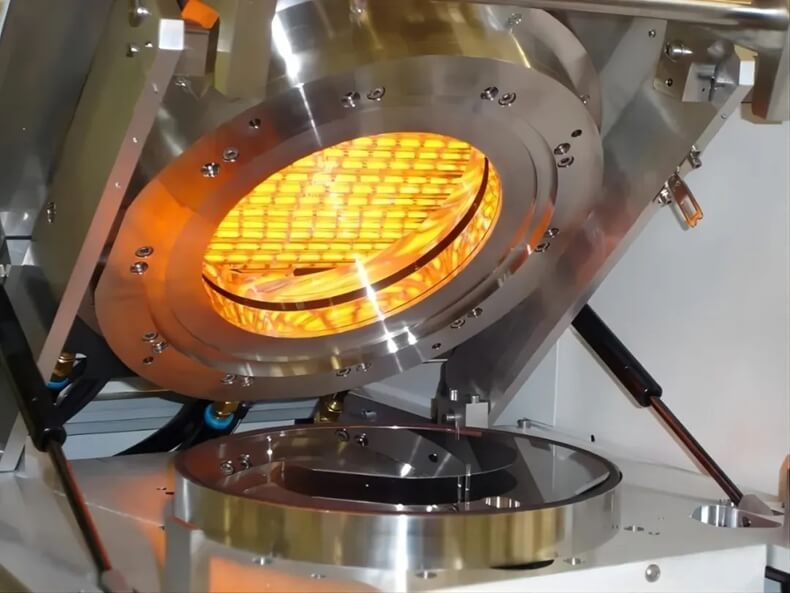
Why we’re switching to IR Curing for Wafer Processing
Let’s be honest: nobody likes dealing with solvent-based drying or those clunky chemical catalysts. In our world, “eco-friendly” isn’t just some marketing fluff we put in a brochure. It’s a hard requirement for how we build our tools. That’s why we use infrared (IR) curing. It uses electromagnetic radiation to get the job done—triggering polymerization or evaporation—without all the extra mess.
How the physics actually works
Think about a standard convection oven. It has to heat up the air first, which is slow and inefficient. IR is different. The energy goes straight to the wafer surface. This is a huge win because we can ditch those massive airflow systems. You know the ones—the ones that are always leaking particulates or need constant, expensive filter changes. We just target the specific absorption bands of the coating. We put the heat exactly where it needs to be and nowhere else. It saves a ton of energy.
Cleaning up the process
Old-school curing is usually a nightmare of VOC-heavy solvents and lead-based stabilizers. With IR, we can just stop using those chemicals. Since the heat hits instantly, we can switch to halogen-free resins that cure with UV or heat. It’s a much cleaner way to work. You get a dry wafer, and you aren’t venting toxic fumes into your cleanroom. It just feels safer.
The tricky parts
Now, it’s not all magic. High-intensity IR lamps pack a serious punch. That’s great for getting wafers through the system faster, but it’s a lot of heat to manage. If your cooling plates aren’t up to the task, you’re going to have problems. We’re talking wafer warping or nasty “hot spots.” You have to be careful. It’s a balancing act between the lamp wattage and the wafer’s thermal mass so you don’t accidentally burn the edges. We’ve designed these systems to slide right into the spot where your old convection setups used to be. You’ll notice the footprint is smaller and your power bills will drop. Just make sure your sensors are dialed in, because the ramp-up happens fast. Really fast.