
Stop Wasting Time: Why IR Heating Beats Forced Air for Wafers
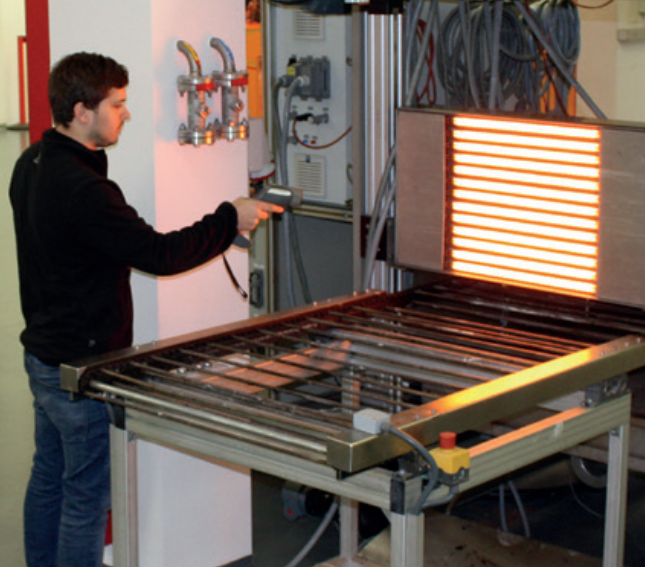
If you’ve spent any time in a fab, you know the frustration of waiting. In semiconductor processing, we’re seeing a big move away from blowing hot air around and toward precision Infrared (IR) heating. It really comes down to how the heat actually gets to the wafer. Forced air is basically a convection oven. You have to heat up every single cubic inch of air in the chamber before the wafer even starts to feel it. IR is different. It’s radiant energy. It hits the wafer surface directly. The “Dead Time” Problem Here’s the thing: air is terrible at moving heat. When you rely on convection, you deal with this annoying thermal lag. You wait for the air to get hot, then you wait for that heat to soak into the silicon. It’s just dead time. IR sensors and emitters kill that lag. The energy moves at the speed of light. You can crank the temperature up or drop it down in seconds. When you’re pushing thousands of wafers a day, shaving 30 seconds off a bake cycle isn’t just a small win—it’s a massive boost to your hourly output. Actually Knowing the Temperature We use IR sensors to keep an eye on the wafer surface in real-time. Think about thermocouples for a second. They have to actually touch the wafer, which is a great way to contaminate your work. IR sensors don’t touch a thing. You get an instant read of the surface from a distance. This makes the whole control loop much tighter. If a sensor picks up a cold spot, the IR lamp adjusts right then and there. You don’t get that “overshoot” you see with air systems, where the heater keeps blasting because it’s measuring the air temperature instead of the actual wafer. The Catch Now, IR isn’t magic. It’s directional. If something is shadowing the wafer or if your lamp is slightly crooked, you’re going to get uneven heating. You can’t just blow air and hope for the best here. You have to be really intentional about where the lamps go and how the sensors are placed to make sure the heat is uniform across the whole disk. It takes a bit more planning upfront, but the speed is worth it.