


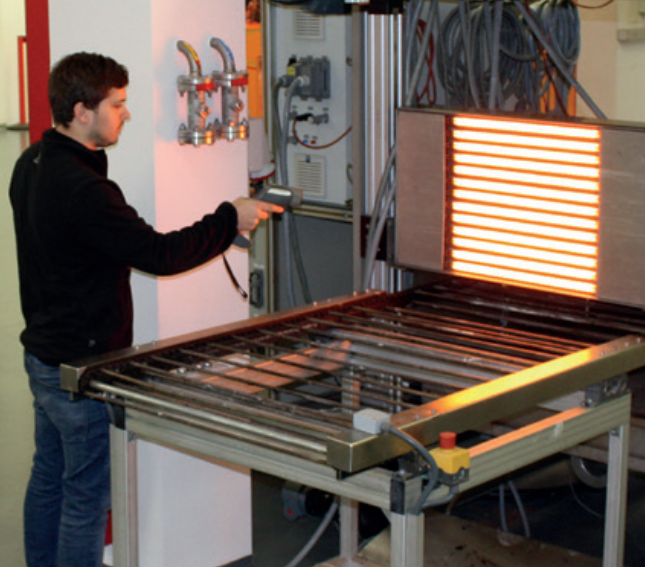
On the lithography floor, the soft bake isn’t some warm-up. It’s the step that locks the photoresist in place—pulling out the casting solvent and setting the thermal budget you’ll live with the rest of the run. If the heater doesn’t pull its weight, you’re staring down non-uniform thickness, edge bead, and exposure latitude drift. And you pay for that in rework, scrap, and yield you can’t get back. What matters under the hood We built the solvent evaporation heater around controlled infrared energy, tuned to the solvent absorption band. That puts the energy where it needs to be—straight into the film—without cooking the wafer backside. Across the bake surface, we hold wafer-level temperature uniformity to ±0.1°C, and we keep repeatability tight run-to-run. The hot zone is isolated to cut thermal bleed and keep adjacent chemistry safe. Cleanroom behavior is baked into the interfaces: Class 1–100 compliant materials, low outgassing, and a particle-controlled layout that keeps contamination off the wafer. The heater runs 24/7 with stable output; units have logged 5,000+ hours with less than 5% intensity drift. Why this matters on the line In production, the payoff shows up as stable critical dimensions and fewer excursions. With temperature that tight, you can shorten the bake window without risking the profile, so throughput moves. You also use less energy, because the heat lands on target instead of bleeding across the chamber. Photoresist profiles stay consistent across lots, which cuts edge effects and keeps pattern fidelity honest. That means fewer rework cycles, lower consumable spend, and line performance you can plan around. A few field notes Installation has to respect the thermal and mechanical interface. The heater performs when the target surface is flat, clean, and aligned—mismatched fixtures or uneven contact will wreck uniformity. Expect a short warm-up to hit thermal equilibrium, and make sure your solvent load is within the design range. Plan for periodic calibration to keep that ±0.1°C spec intact. Precision doesn’t maintain itself.