

Why Vacuum IR Heating is the Way to Go for Lead-Free Semi Standards
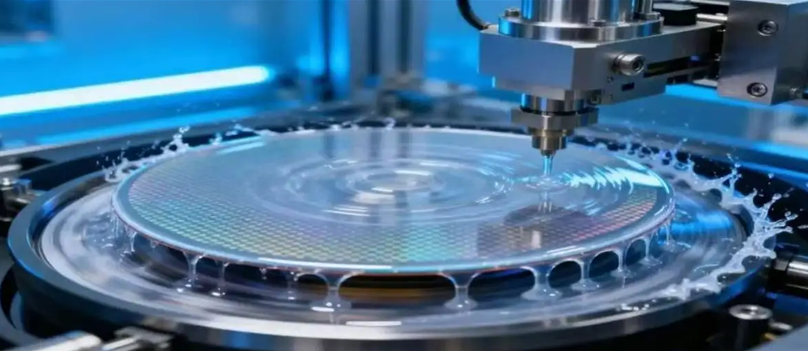
When people talk about going “lead-free” or “green” in semiconductor fab, they usually focus on the chemistry. But if you’ve actually spent time on the floor, you know the real headache is the heat. Old-school convection ovens are a drag. They spend way too much energy heating up massive amounts of air, and let’s be honest—air is just a vehicle for dust and particulates to land on your wafers. We decided to stop fighting the air and just get rid of it. That’s why we use vacuum infrared (IR) heaters. Cutting out the middleman Here is the thing about a vacuum chamber: there’s no air to move heat around. No conduction, no convection. Just pure radiation. The IR lamps send out electromagnetic waves that go straight through the substrate and hit the material directly. You aren’t waiting for a heating element to warm up a gas, which then warms up the part. It’s fast. Really fast. Your cycle times drop because the energy doesn’t have to fight through a layer of air before it does its job. Hitting those tight specs Lead-free solders and adhesives are picky. If you miss the temperature window by a bit, you’re looking at oxidation or warped parts. It’s stressful. We handle this by tuning the IR wavelength to match exactly what the curing agent needs to absorb. It’s like a lock and key. This means you don’t overshoot your temp. Plus, since you’re in a vacuum, you can ditch the nasty chemical solvents and stabilizers. It’s just a clean, dry process. No mess, no stress. The “Gotcha” (The Engineering Part) Now, it isn’t all magic. High-intensity IR arrays put out a ton of heat. If your cooling jackets aren’t up to the task, you’re in trouble. If a cooling loop fails, that radiant heat will bake your vacuum seals or warp the whole chamber housing before you can blink. You can’t just plug these in and hope for the best; you have to make sure your system can actually move that heat away. To keep things steady, we suggest using a closed-loop PID controller with pyrometers. It keeps the wafer surface within ±1°C, so you can actually sleep at night knowing your batch isn’t being ruined.