
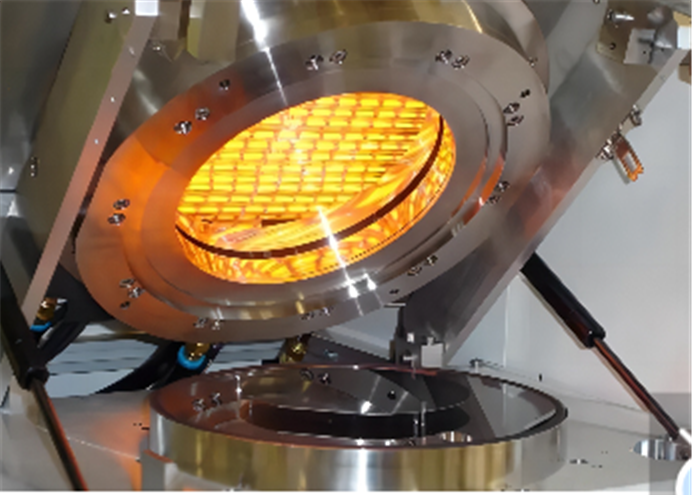
Managing Heat in Bio-Sensor Fabrication
When you’re building bio-sensors, heat is a tricky beast. You need it to cure polymers and bond substrates, but if you overdo it, you’ll fry your biological reagents instantly. It’s a delicate balance. In a modern “Smart Fab,” we’ve mostly stopped relying on those big, clunky bulk ovens. Instead, we use targeted infrared (IR) systems. Why? Because they let you control heat down to the millimeter. It’s a level of precision that actually makes digital production possible.
Getting the Data Right
If you’re running a data-driven line, your heat source can’t be a guessing game. It has to be predictable. We lean toward short-wave IR lamps because they react the second you change the voltage. Your PLC can tweak the heat flux in real-time based on what the sensors are telling it. It’s a tight loop. If a substrate comes through a bit thicker than the last one, the system just handles it. No panic, no wasted parts.
The Hardware Reality
Usually, we go with quartz envelopes for these lamps to keep the transmittance high. Now, if you’re tight on space, you might be tempted to use a high-wattage density tube to keep the heating zone small. But here’s the catch: those high-intensity lamps throw off a lot of waste heat. If you don’t get your cooling fans and heat sinks sorted, your ambient temperature will climb, and your calibration will start to drift. It’s a headache you don’t want.
Why IR Actually Works
Let’s be honest—traditional convection is just too slow. It creates this thermal lag that messes up your data logs and slows everything down. IR is different. It dumps energy directly into the material. It’s the only way to get those rapid ramp-up and cool-down cycles you need when you’re pushing for high throughput. Plus, you can wire these into modular racks. When a tube eventually burns out, you just swap it for a new one and keep moving. Less downtime, more sensors out the door.